By a Silken Thread
The Story of the Caterpillar Club
“Life depends on a silken thread.”
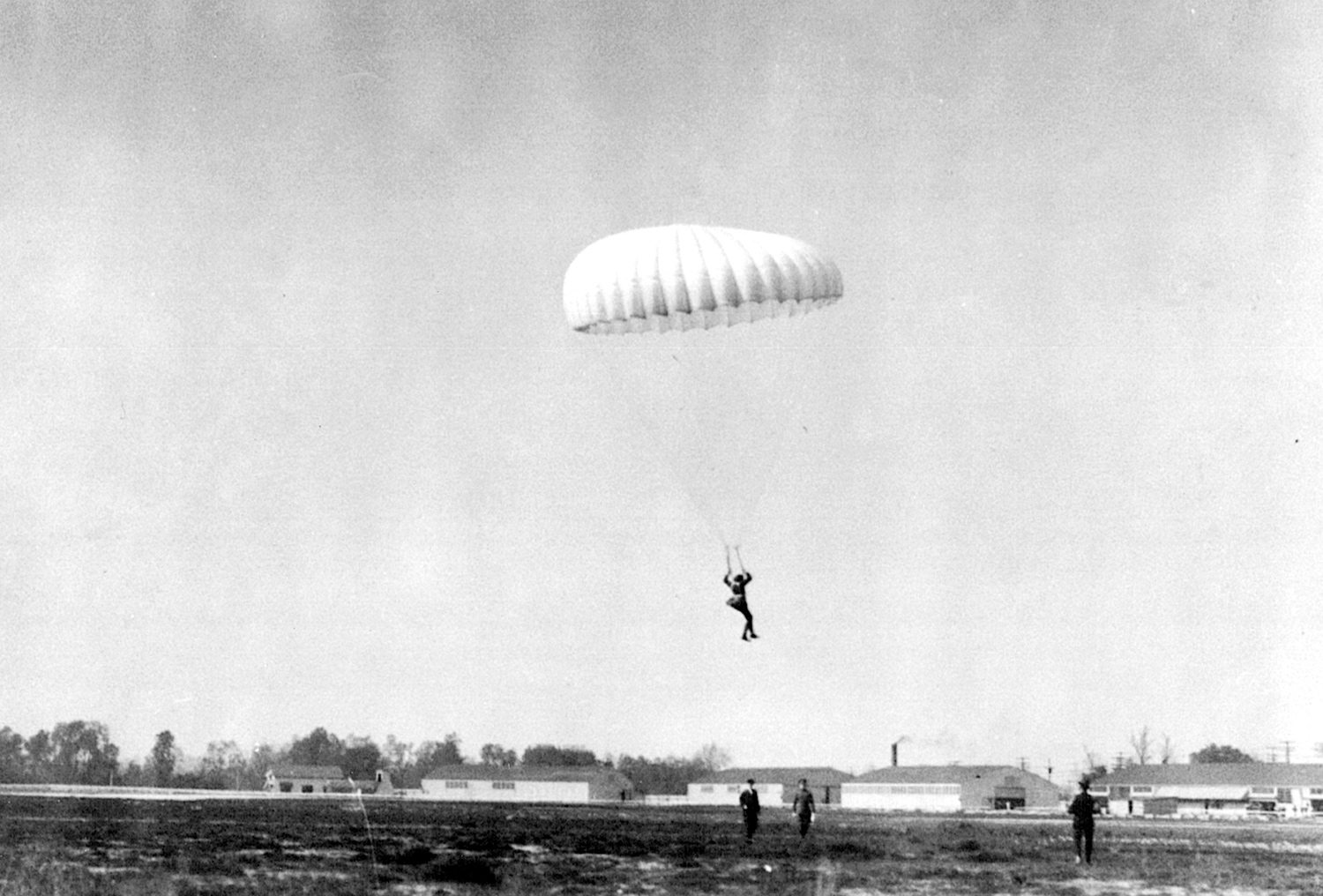
The Caterpillar Club is an informal international association with a simple entry requirement—you owe your life to an emergency parachute descent.
To step out of an aircraft into the open sky is an act against human instinct. To do so while that aircraft is spinning violently toward the earth, engulfed in smoke or shredded by anti-aircraft fire, is a moment of pure, distilled survival.
Since the dawn of aviation, thousands of pilots and aircrew have faced this exact choice. For those who lived through it, the fall became something more than an escape — it became the shared experience that united them in a fraternity unlike any other.
The Chrysalis
A Quiet Metaphor
The club moniker does not celebrate the violence of the crash, nor the mechanical glory of the flight. Instead, it honors the humble silkworm.
Founded in 1922 by Leslie Irvin—the pioneer who manufactured the world’s first free-fall parachutes—the organization was born from a unique realization: because early lifesaving lines were woven entirely from pure silk, every surviving pilot owed their life to a caterpillar.
The Descent
Like a caterpillar letting itself down to earth safely from a high branch, the pilot descends by a single silken thread.
The Metamorphosis
Like a caterpillar breaking free from its cocoon to survive, the aviator must struggle out of a confined, doomed cockpit to live again in a transformed state.
Bombyx mori — the silkworm
The Material Culture
The Anatomy of a Pin
tap dots for detail
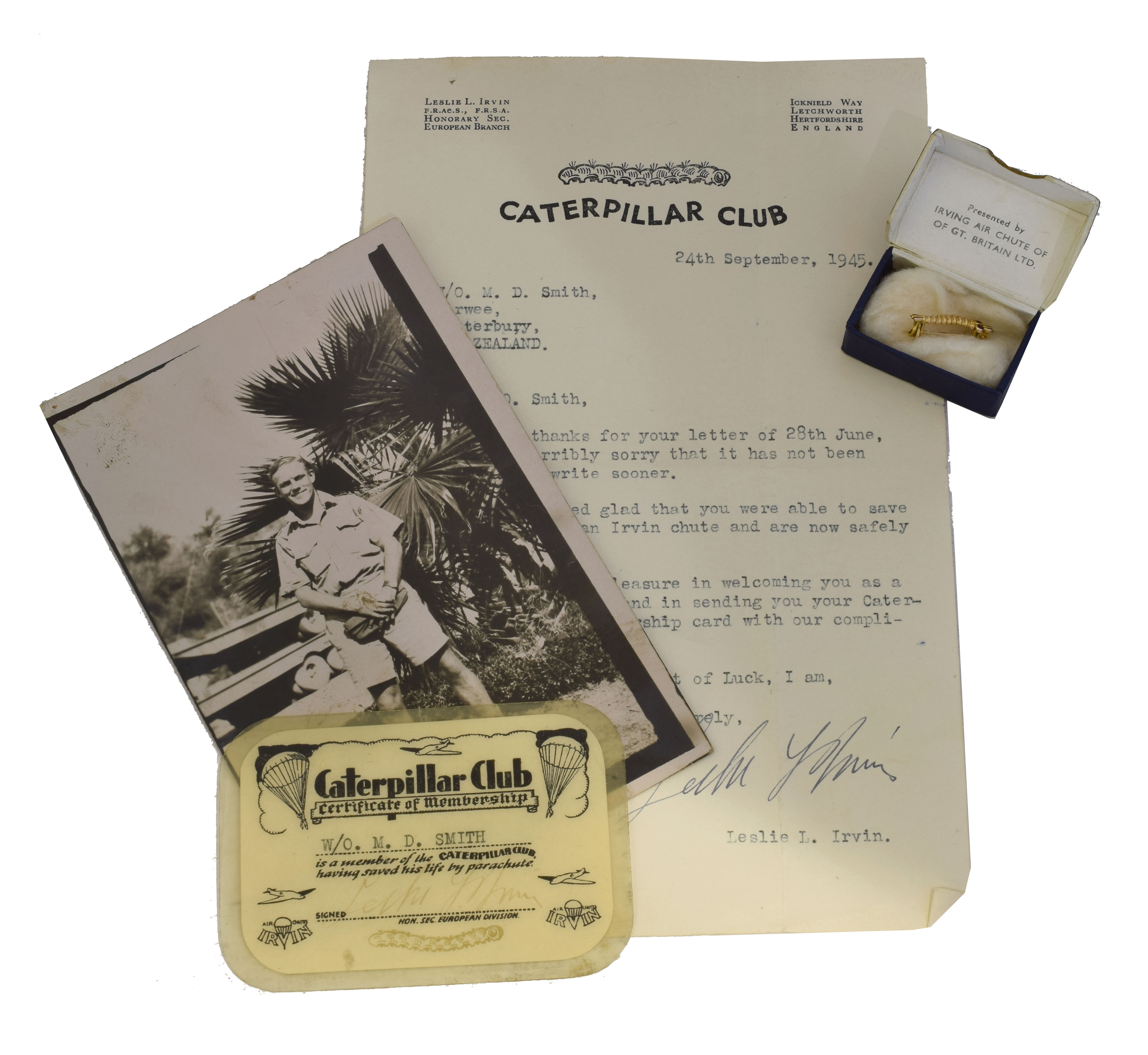
Membership in the Caterpillar Club could not be bought, inherited, or petitioned. It had to be verified by the corporate ledger of the manufacturer that built the parachute. Upon rigorous cross-examination of military records, the survivor was awarded a certificate and a tiny, legendary token: The Caterpillar Pin.
The classic pin issued by the Irvin Air Chute Company featured tiny, glinting amethyst or ruby eyes set into a small, segmented golden silkworm less than an inch long.
As the club’s prestige soared, other manufacturers launched their own iterations. The Switlik Parachute Company issued both gold and silver caterpillars, while the Pioneer Parachute Co. took the appreciation a step further—awarding distinct plaques to the factory workers who had meticulously packed the specific parachutes that saved lives.
The Metaphor & The Material
The Silk Era, 1919–1939
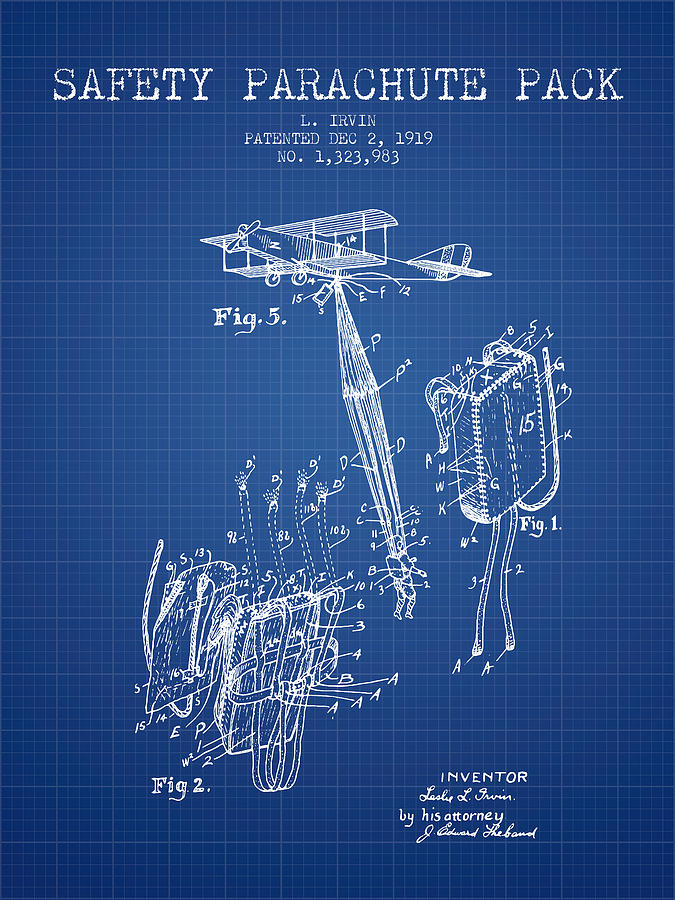
U.S. Patent 1,323,983 — L. Irvin, Safety Parachute Pack, 1919
Before the parachute became a standard piece of military safety equipment, it was viewed as a stuntman’s novelty. Early iterations were bulky, stored in heavy canisters fixed to the aircraft, and relied on the plane’s movement to pull the canopy open. If the plane spun out of control, the lines tangled, sealing the pilot’s fate.
On April 28, 1919, at McCook Field in Ohio, Leslie Irvin jumped from an airplane and manually pulled a ripcord, proving that a human could fall freely through the air and safely deploy a compact, backpack-worn canopy.
These early backpack-worn chutes were entirely reliant on organic luxury. A standard 24-foot escape parachute required roughly 65 yards of high-grade Japanese silk and over a million individual silkworm cocoons. The material was chosen for its unparalleled strength-to-weight ratio, its elasticity under the sudden shock of deployment, and its ability to be tightly packed into a canvas container for months without permanently creasing.
The Strategic Pivot
1940–1945: An Existential Material Crisis
Drag the divider — organic fiber vs. synthetic weave
With the outbreak of World War II, the Caterpillar Club faced an existential material crisis. The Axis powers quickly choked off global shipping lanes, cutting Allied manufacturers off from Japanese silk supplies.
The survival of tens of thousands of aircrews depended on a rapid scientific pivot. In 1941, parachute designers collaborated with chemical giant DuPont to test a synthetic polymer: Nylon.
Nylon was stronger than silk, highly resistant to mildew, and immune to the extreme temperature fluctuations of high-altitude bombing runs. By 1942, nearly all combat parachutes were synthetic.
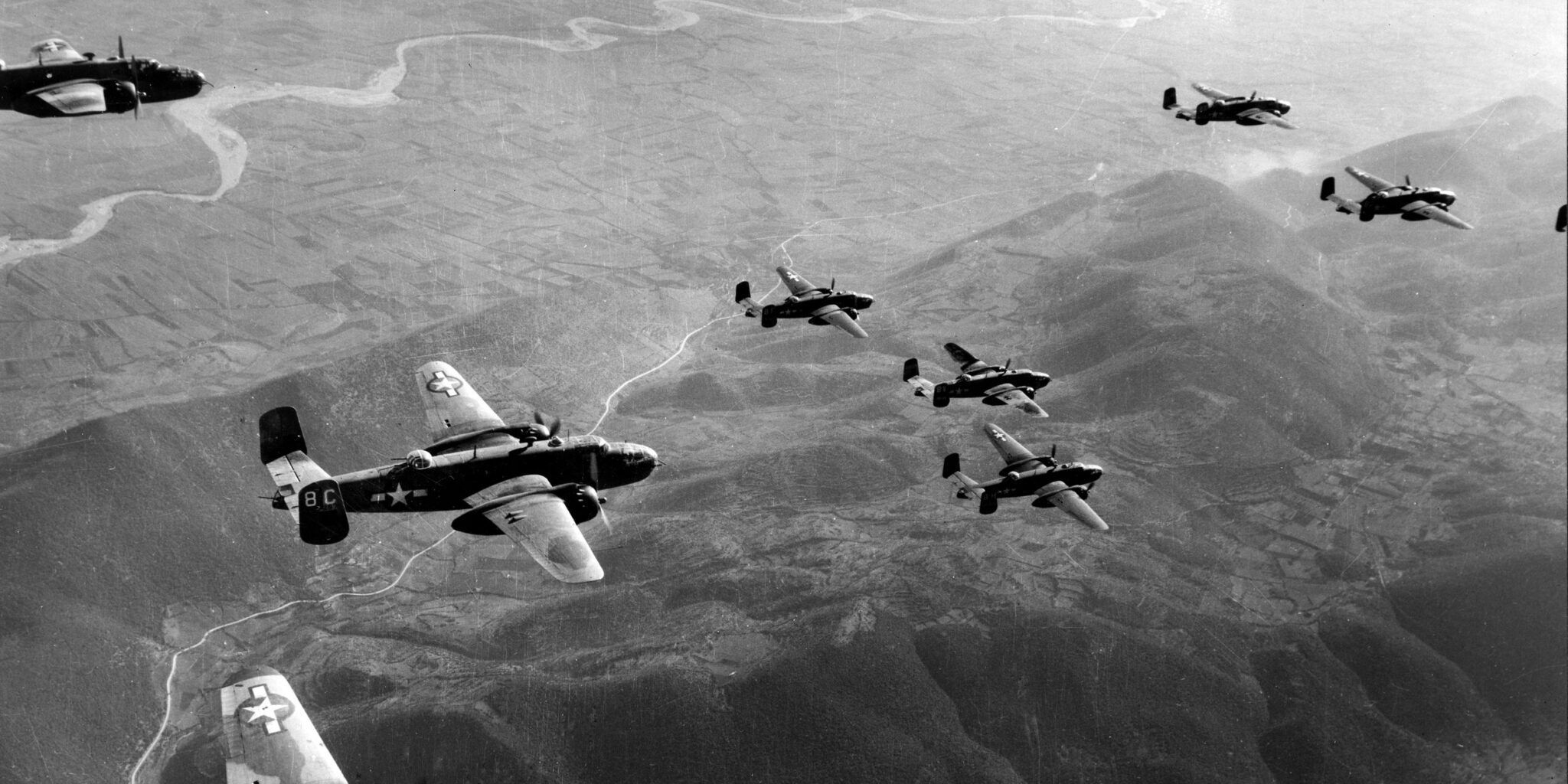
Yet, as thousands of young airmen bailed out over Europe and the Pacific, drifting to safety under canopies born in a chemical lab rather than a cocoon, the tradition never wavered. The material had changed, but the debt to the caterpillar remained permanently stitched into the culture of aviation.
The Ledger
The report said lost, the pin said survived.
Military records treated an aircraft loss as a statistic:
Aircraft lost to flak over Essen. Crew bailed out.
A lost machine. A completed mission report. A file marked with the outcome of a single combat encounter. The paperwork captured what happened to the aircraft, but not the human drama that followed.
The Caterpillar Club recorded something different. Each report represented not simply an aircraft destroyed, but a life saved. Through witness signatures, crash locations, and parachute records, every claim was carefully verified before a small golden pin could be awarded — a quiet symbol that behind every lost aircraft was a survivor who had made it home.
Double tap on the archive to inspect
The Arbiters of Fate
The Bureaucracy of Belonging
The requirements for entry were simple, but unyielding. They did not honor survival itself — they honored the instrument of survival. Read each case, then render your verdict.
Case Study 1
Flight Sergeant Nicholas Alkemade
Falls 18,000 feet out of a burning Avro Lancaster bomber without a parachute shroud. Survived by falling through pine branches into a soft snowdrift.
Case Study 2 — The Question of Intent
Hypothetical: Civilian Skydivers
Imagine an accident mid-flight that disables the aircraft’s tail assembly. Eleven skydivers bail out successfully using their gear; the pilot, who intended to land the craft, bails out at the last second. Render a separate verdict for each party.
The eleven skydivers had each boarded the aircraft with the premeditated intent to jump.
The pilot intended to land the aircraft, but was forced to bail out only as a last-second emergency act.
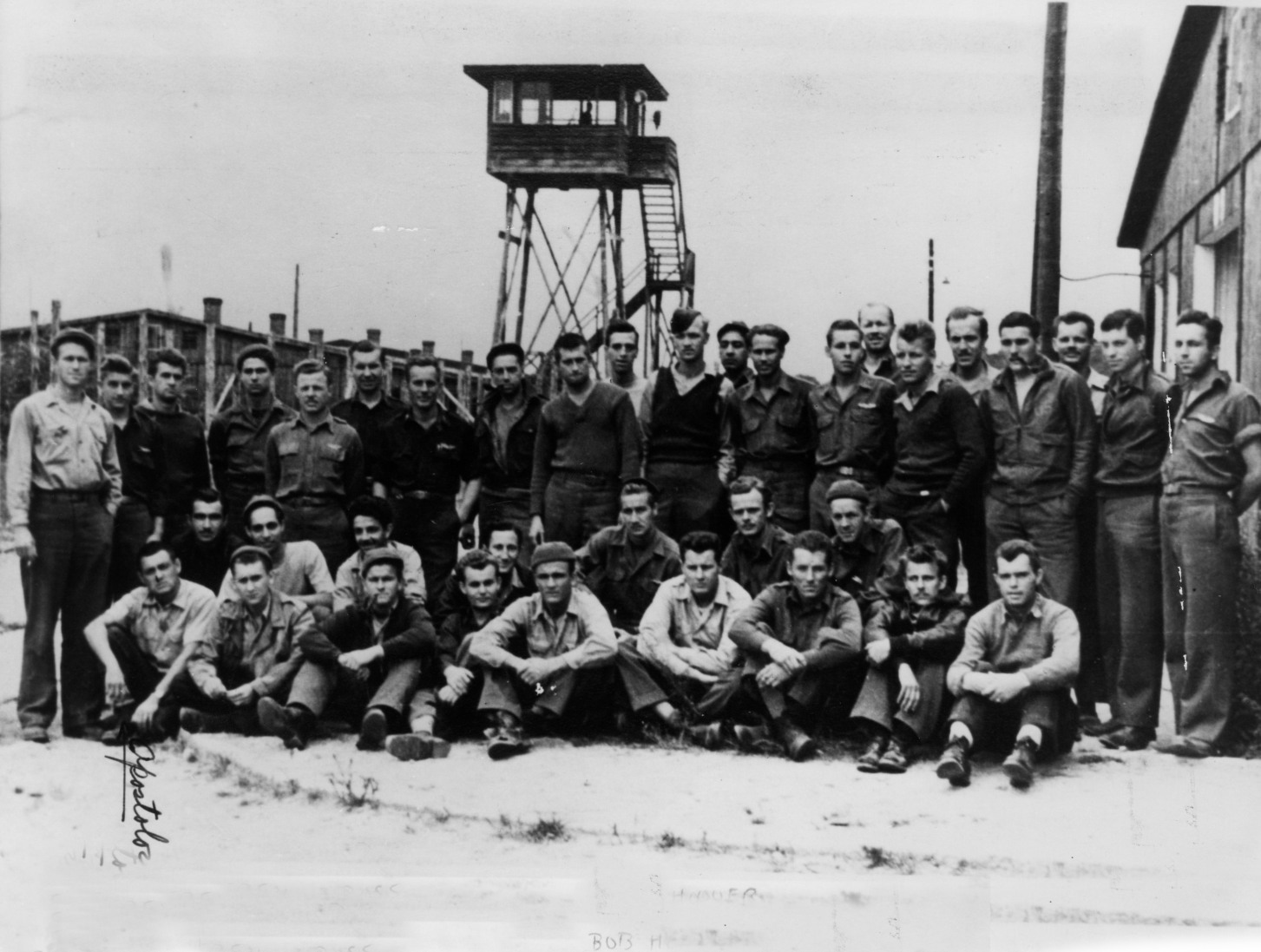
Little Silk Worm
A Poem Found in Leland Potter’s POW Journal
Little silk worm—so very small,
You saved me from an awful fall.
Tho you’re such an ugly thing,
I owe my life to your man made wing.
Global Hall of Caterpillars
The Vanguard, The Barrier Breaker & Famous Faces
Every name on the Caterpillar Club’s roster tells a story of a fall that should have been fatal. Some members would become famous, others would return quietly to their lives, but all had one thing in common: they had taken the only chance left when their aircraft failed — a parachute and a fall into the unknown.
The Global Charter
The European Ledger & A Salty Fraternity
European Division, Five-Year Ledger
14,387
In five years of war, membership of the European Division increased by this figure alone — each new member representing a life saved by an Irvin-type airchute in an emergency.
The Caterpillar Club was a global brotherhood bound together not by flag or uniform, but by the shared experience of gravity.
A Kindred Fraternity
The Goldfish Club
The Caterpillar Club was not the only fraternity born from an aviator’s brush with death. Where a parachute was only the beginning of survival, another club waited — for the aircrews who survived not only a fall from the sky, but a landing in the sea.
Founded in November 1942 by C. A. Robertson of the P. B. Cow & Co. life raft works, the Goldfish Club welcomed anyone whose survival depended on an inflatable dinghy or life jacket rather than a parachute canopy. Its distinctive badge — a white-winged goldfish soaring above two blue waves — became a symbol of the lives saved through these essential pieces of survival equipment.
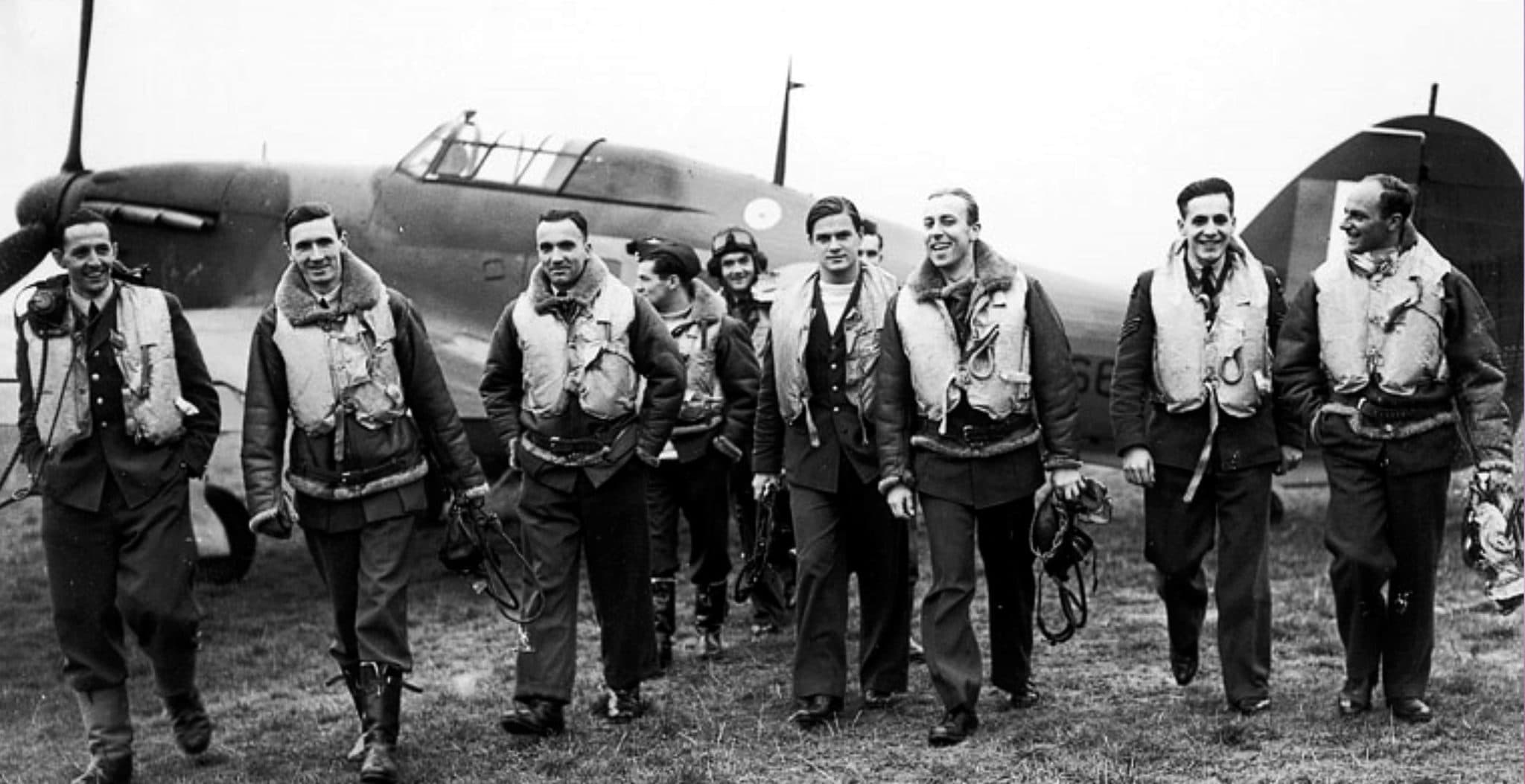
The Threads That Remain
The Last Active Branch
As the decades rolled on, the thousands of young airmen who earned their pins during the mid-20th century aged into history. The grand, sprawling reunions once held in major cities quietly wound down.
Today, the torch is carried by the Caterpillar Club in Blackpool, England — recognized as the last remaining active social branch of the club. Each March its members, a mix of surviving World War II veterans, their descendants, and aviation historians, meet to carry on the tradition.
Over the past century, it is estimated that parachutes manufactured by Irvin and its successors have saved over 100,000 lives.